

October 26, 2026
2027 January 1st, The Phone Number Comes Off the Battery Mark
By Natalia Perez, International Hazardous Materials Transportation Instructor and Specialist, Hazardous Control Inc.
If the battery mark in your warehouse still has a space for a telephone number at the bottom, that label stock expires on December 31, 2026.
From January 1, 2027, under the IATA Dangerous Goods Regulations, 68th Edition, two things change.
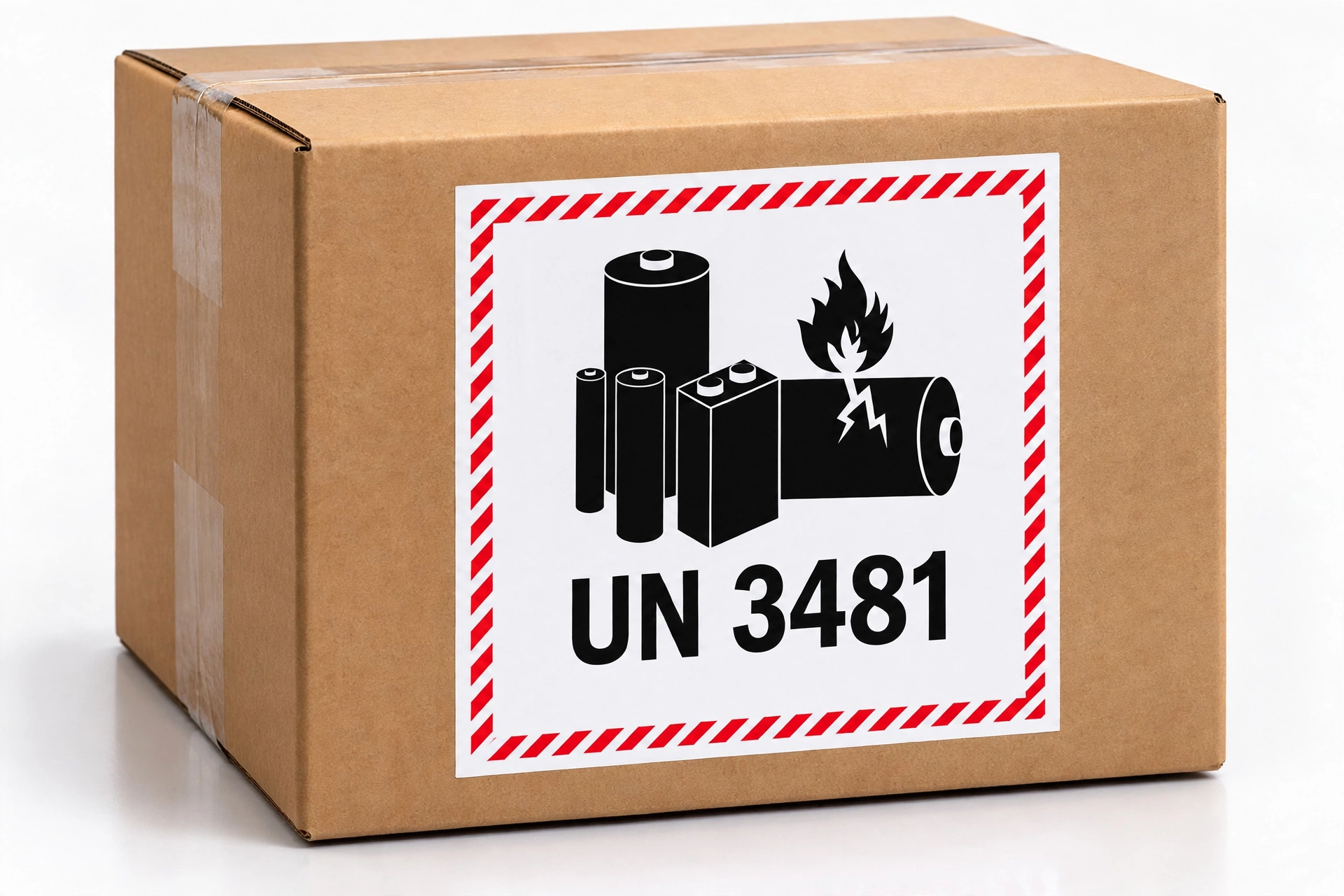
It is no longer the lithium battery mark
The new name is the battery mark. The same mark now also covers sodium ion batteries, including UN 3551 and UN 3552. If your SOPs, checklists and shipper instructions still say lithium battery mark, update them. In January, your agents will be looking for a name the regulation no longer uses.
The telephone number field is gone
The mark keeps the battery symbol, the red hatched border and the UN number. No phone number line.
The UN number has to be right: UN 3480 and UN 3481 for lithium ion, UN 3090 and UN 3091 for lithium metal. If a package carries more than one UN number, all of them go on the mark.
The size did not change. 100 mm by 100 mm, reduced to 100 mm by 70 mm only for small packages, with red hatching at least 5 mm wide.
This comes from the UN Model Regulations, 22nd revised edition, which dropped the telephone number and allowed the old mark only until December 31, 2026. ICAO, IATA and the IMDG Code moved the same way.
What acceptance gets wrong
IATA says the old mark, with the telephone number, should not by itself be the sole reason to reject a package. It carries extra information. It does not make the shipment more dangerous.
That is not permission to keep tendering on old labels in 2027. Stop ordering the old mark now, use up your stock before the deadline, and do not leave your shipper depending on an airline agent’s tolerance, especially on a shipment tendered in late December that will still be moving on January 1.
The number leaves the label, not the paperwork
Removing the number from the mark does not remove the emergency response telephone number from the transport document where the regulation requires it. Under 49 CFR that obligation is separate, and it still applies. A shipper who deletes the number from his papers has created a real problem out of a label change.
Do this in October
- Audit label rolls, preprinted cartons, printer templates and the mark your booking system generates. Most forwarders find the old version in three of those four places.
- Update your acceptance checklist and shipper instructions: battery mark, no telephone number on the mark, UN number checked against the packing instruction.
- Warn your regular battery shippers in writing now. The ones who print their own cartons need lead time.
The change is small. One field disappears from one mark. The forwarders who get hurt in January will not be hurt by the change. They will be hurt because nobody checked the label drawer until the freight was on the scale.
Lack of knowledge does not relieve you of responsibility.
The new mark, already in our store
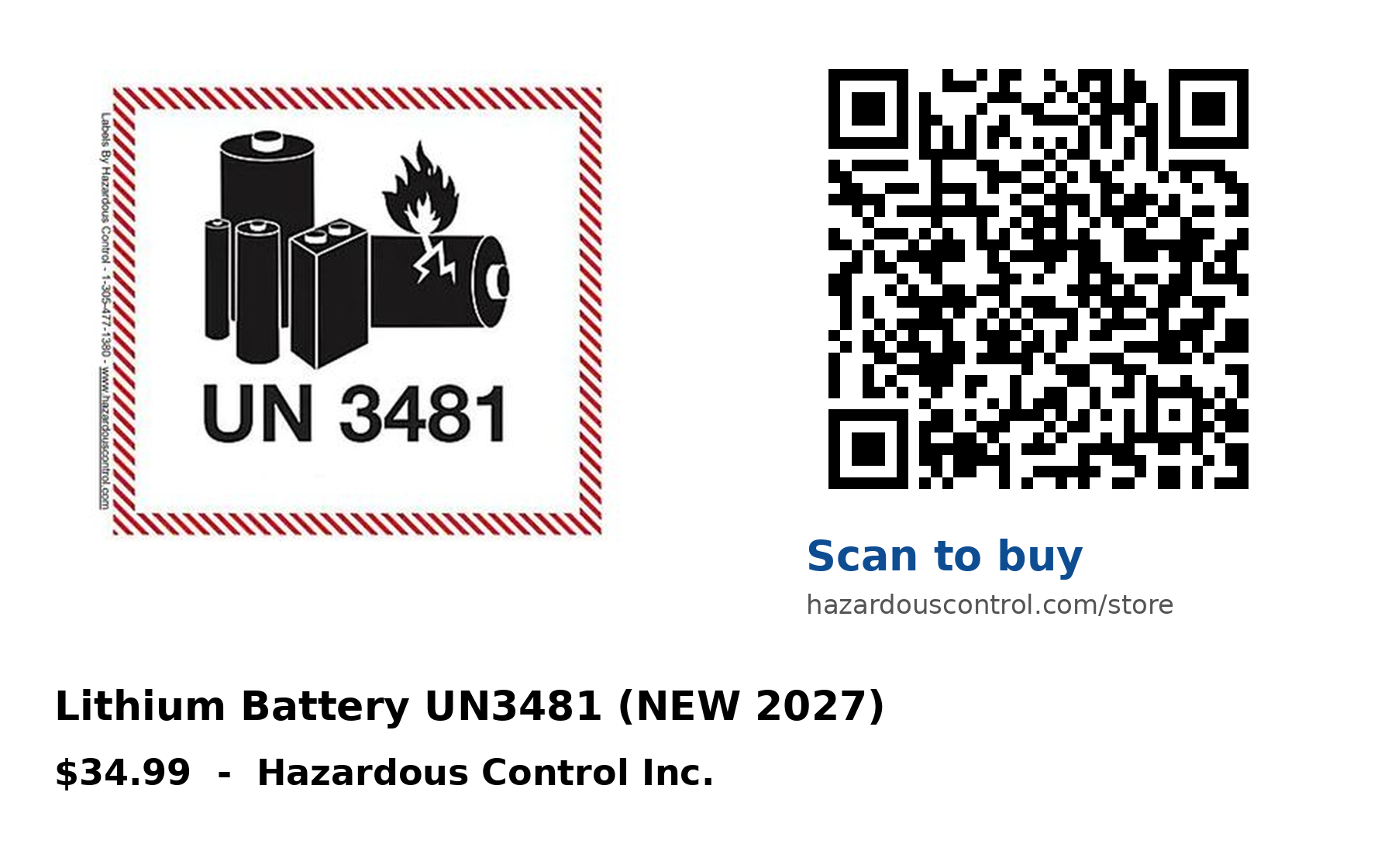
Hazardous Control Inc. already stocks the new version: Lithium Battery UN3481 (NEW 2027), $34.99, with the telephone number field removed and the UN number on the mark. Order it here: Lithium Battery UN3481 (NEW 2027).
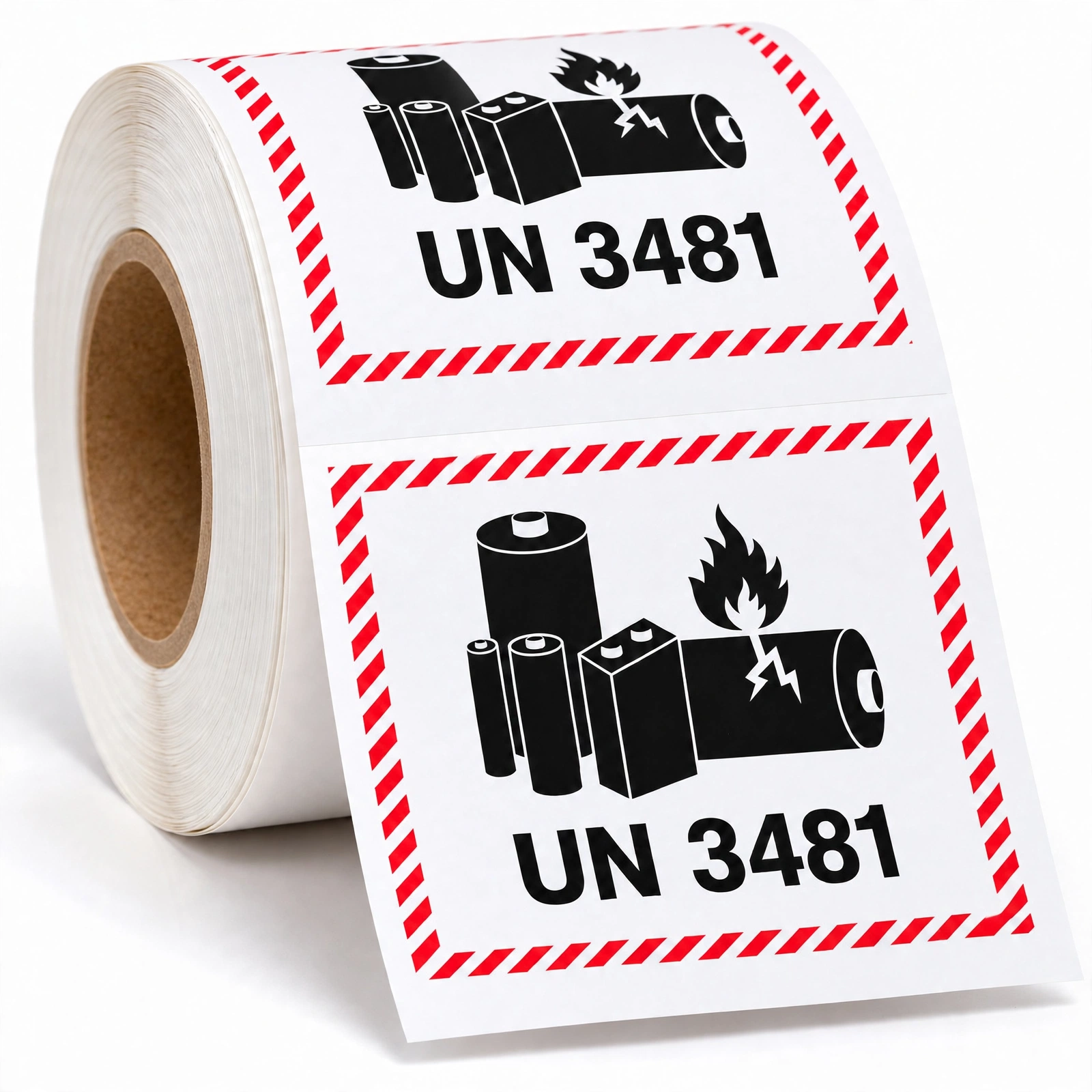
Scan the QR code in the image to go straight to the product. The other UN numbers are in the same store catalog.
Training
Hazardous Control Inc. trains acceptance, warehouse and operations teams on dangerous goods, lithium and sodium ion batteries, and the 2027 changes, online and in person, in English and Spanish. Miami, Florida. hazardouscontrol.com, [email protected], (305) 477-1380.
Natalia Perez is an IATA Best Performer, United States, 2018 and 2020, with more than 20 years of experience in air, ocean and ground hazmat transportation.
Sources: IATA Dangerous Goods Regulations, 68th Edition (2027), battery mark changes. UN Recommendations on the Transport of Dangerous Goods, Model Regulations, 22nd revised edition, transition note to December 31, 2026. 49 CFR 173.185 and Part 172, Subpart G.
By Natalia Pérez, Hazardous Control Inc., Miami, Florida.